What should you expect?
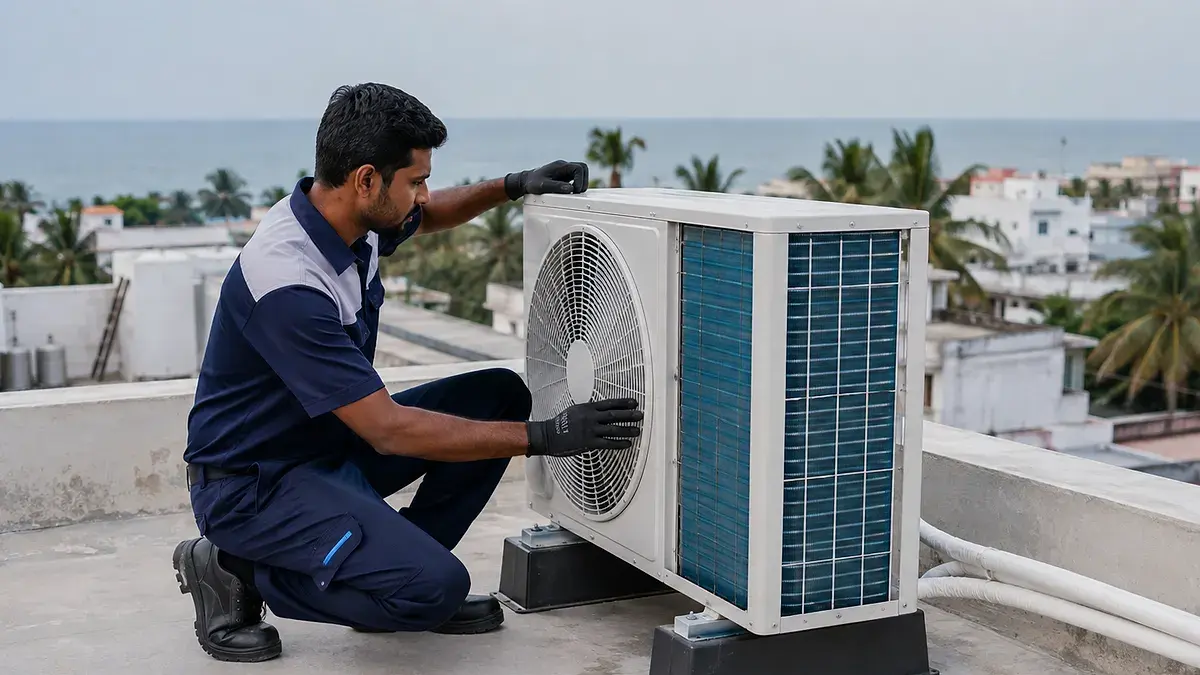
Coastal air damage is reduced—not eliminated—by choosing equipment suitable for the exposure, placing the outdoor unit where it has free airflow but less direct salt spray, using manufacturer-approved corrosion protection, keeping drains and insulation sound, and inspecting coils, fasteners, electrical enclosures and pipe joints before corrosion becomes severe. Never block condenser airflow or apply unapproved paint or oil to the coil.
Protect the condenser without trapping its heat
Outdoor units in Pondicherry and Cuddalore may face humid salt-laden air, while sites farther inland can still experience moisture, dust and monsoon exposure. Corrosion risk depends on distance from the sea, wind direction, direct spray, shelter, materials and maintenance—not the city name alone.
The outdoor unit rejects heat. Any screen, enclosure or cover must preserve the manufacturer clearances and prevent hot discharge air from returning to the coil. Protection that blocks airflow can create a new performance problem.
Rooftops and sea-facing elevations can receive more direct exposure than a sheltered inland courtyard. Set the inspection interval from the actual installation position and visible condition.
Assess the site exposure first
Direct salt exposure
Note sea-facing position, prevailing wind, spray, rooftop exposure and distance from the shoreline.
Drainage and standing water
Check whether rain or condensate can remain around mounts, panels or pipe penetrations.
Mixed metals and damage
Look for rust, white or green deposits, damaged fins, loose fasteners and coating loss.
Airflow and access
Confirm any protective screen leaves required clearances and allows safe cleaning and inspection.
Components that deserve coastal-condition checks
Outdoor coil and fins
Inspect for deposits, fin deterioration and coating damage without bending the delicate fins.
Cabinet and base pan
Check edges, drain paths, fasteners, paint damage and locations where water can collect.
Electrical enclosure
Look for sound covers, seals and cable entries; electrical inspection should be completed safely by trained personnel.
Copper joints and valves
Inspect accessible joints, service valves and supports for corrosion evidence or oil staining.
Mounting hardware
Review brackets, bolts, vibration pads and structural support for corrosion and loss of strength.
Pipe insulation
Replace damaged, open or UV-degraded insulation using suitable materials and weather protection.
Indoor drain system
Humidity produces condensate; keep the tray, pipe, slope and discharge route clear.
Protective finish
Use only coatings or repair methods compatible with the equipment and manufacturer guidance.
No single coating can replace good siting and maintenance
Coastal durability is strongest when equipment selection, installation position, material compatibility, drainage, approved coatings and inspection work together. A coating on a poorly ventilated or permanently wet unit is not a complete solution.
| Protection layer | Good practice | Risk to avoid |
|---|---|---|
| Equipment selection | Ask for documented coastal or anti-corrosion features | Assuming every blue-fin label means the same protection |
| Placement | Reduce direct spray while keeping clear airflow | Sealed boxes and hot-air recirculation |
| Cleaning | Use manufacturer-approved, low-pressure methods | High pressure, harsh acids or wetting live electronics |
| Inspection | Record coil, cabinet, fasteners, joints and mounts | Waiting until metal strength is visibly lost |
Fresh-water rinsing must follow equipment guidance
Some coastal-maintenance programmes use controlled fresh-water rinsing to remove deposits, but the correct method, frequency and protected areas depend on the unit. Isolate power, protect electronics, avoid high pressure and follow manufacturer instructions or trained service procedures.
- Never spray an energised unit.
- Do not flatten condenser fins with a pressure washer.
- Do not use household acids, bleach or salt-removal chemicals without approval.
- Record the condition before and after cleaning.
A coastal AC protection routine
- 1
Document exposure
Record installation position, sea-facing direction, shelter, drainage and existing corrosion.
- 2
Correct placement risks
Improve drainage, mounting, insulation and clear airflow without creating a hot enclosure.
- 3
Clean safely
Remove deposits using methods approved for the specific equipment and environment.
- 4
Repair early damage
Treat compatible cabinet or coating damage before corrosion spreads; replace unsafe structural hardware.
- 5
Set the next inspection
Use visible condition and exposure severity—not a generic annual schedule alone.
Create a coastal-condition photo record
Photograph the same coil edges, base pan, fasteners, brackets, service valves and cable entries at each inspection. Consistent angles make deterioration easier to see.
Keep the AC model, coastal-protection features, installed coatings and cleaning products in the asset record. This reduces the risk of incompatible repairs later.
When corrosion affects mounting strength, electrical safety, pressure-containing components or the coil, arrange professional assessment promptly rather than applying cosmetic paint.
Ask what is included, what is excluded, which findings support additional work and how the final result will be tested.
Common mistakes to avoid
- Wrapping the outdoor unit or blocking airflow while it operates.
- Applying ordinary paint or oil to heat-exchanger fins.
- Using high-pressure water on delicate fins and electronics.
- Ignoring rust on brackets and structural fasteners.
- Assuming one anti-corrosion treatment lasts forever.
- Approving work without asking how the final result will be tested and recorded.
How local climate changes the AC workload
The same AC can behave differently across the service region because outdoor heat, humidity, dust, salt exposure, room construction and daily operating hours are not identical.
Pondicherry
Salt-laden coastal air, high humidity and long cooling hours make clean airflow, drainage, outdoor-coil condition and corrosion checks especially important.
Villupuram
Strong daytime heat and seasonal dust can increase heat load and restrict coils or filters, so shade, sealing and timely cleaning matter.
Cuddalore
Coastal moisture, salt exposure and monsoon conditions call for corrosion-aware inspection, sound mounting and reliable condensate drainage.
Chidambaram
Warm, humid weather and mixed residential or commercial use require correct capacity, moisture removal, airflow and realistic operating schedules.
Frequently asked questions
How does coastal air damage an AC?
Salt and moisture can accelerate corrosion of exposed metals, coils, cabinets, fasteners, brackets and electrical areas. Direct exposure, material combinations and standing water can increase the risk.
Can I cover the outdoor AC unit to protect it from salt air?
Do not cover or enclose an operating condenser unless the solution is specifically designed with required airflow and clearances. Hot-air recirculation can reduce performance and damage equipment.
Should I wash an outdoor AC unit near the sea?
Controlled fresh-water cleaning may be part of a coastal-maintenance plan, but power isolation, electronics protection, pressure, cleaning products and frequency must follow manufacturer guidance or trained service practice.
What does anti-corrosion coating protect?
Depending on the product, it may protect coil fins, tubing, cabinet panels or electronics. Coverage and durability vary, so ask for documented specifications and compatible maintenance requirements.
How often should a coastal AC be inspected?
Use exposure and visible condition. A sea-facing rooftop may need more frequent checks than a sheltered inland installation. Set the interval after an initial inspection and review it as conditions change.
Can corroded AC brackets be repainted?
Surface coating may help only when structural strength remains sound and the preparation and product are suitable. Heavily corroded or weakened brackets and fasteners should be professionally assessed and replaced where necessary.
Talk to Turbo Cooling Solutions
Share the AC type, room use, operating hours and exact symptom. Turbo Cooling Solutions can inspect the system and explain the findings before recommending work.