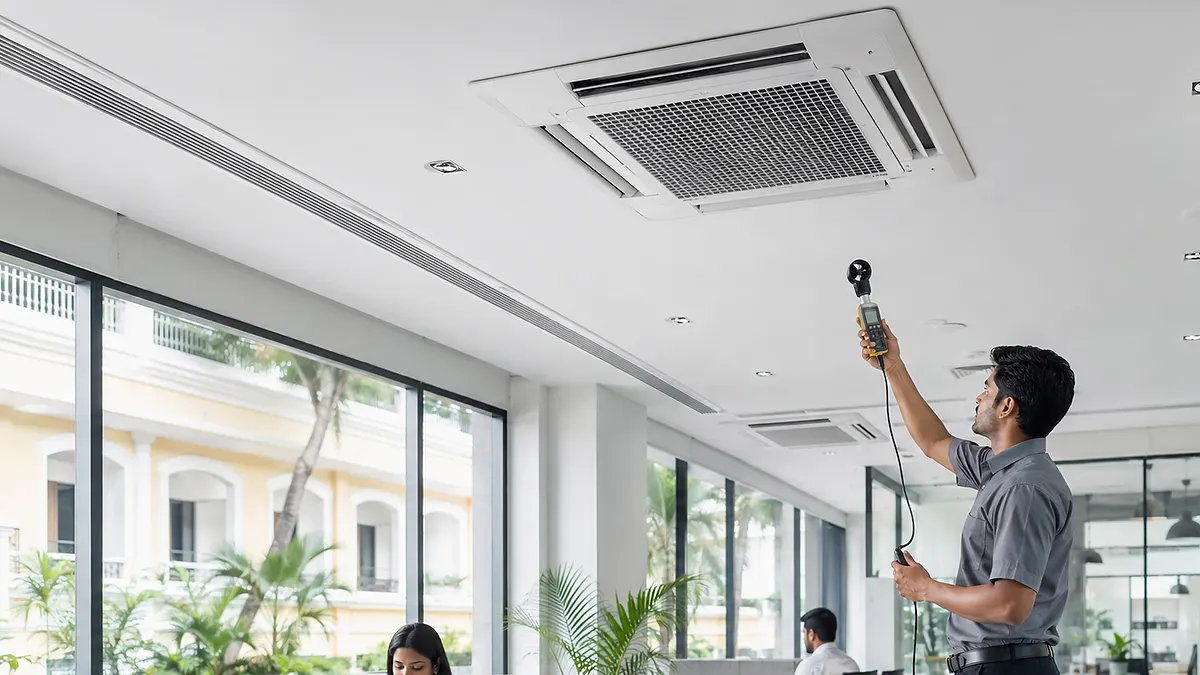
How can you tell if a cassette AC drain pump has failed?
Cassette drain-pump warning signs include water around the ceiling panel, an unusually full tray, pump noise without discharge, repeated start-stop operation, a float or drainage error and cooling shutdown. Turn the AC off if water approaches wiring or the ceiling is wet. Diagnosis should inspect the tray, float movement, pump power and output, lift height, check valve, discharge blockage, pipe slope and slime before replacing the pump.
Protect the ceiling and electrical area before testing
A ceiling leak does not prove pump failure. A blocked pipe, stuck float, loose hose, incorrect lift, dirty tray, damaged insulation or rain entry can create similar symptoms.
Chidambaram humidity creates significant condensate during cooling. Move people and property from below a leak, isolate safely and inspect through intended service access. Do not keep resetting a drain alarm or blow debris deeper into a concealed line.
Chidambaram experiences hot, humid conditions with seasonal dust and rain. AC decisions should consider room use, closure periods, drainage, outdoor exposure and the condition found during inspection.
What to check before approving work
Start with safe, observable conditions and move to model-specific technical tests only when the evidence requires them.
Water location
Identify tray overflow, pipe joint leakage, panel condensation or another building-water source.
Pump sound and discharge
Note whether the pump runs, cycles, rattles or produces no water at the outlet.
Float or alarm
Record error code and inspect safe float movement and contamination with power isolated.
Professional checks for Cassette AC Drain Pump Diagnosis
Tray and float
Clean and inspect level, slime, float movement and alarm function.
Pump electrical test
Verify supply, command, winding or electronic condition and pumping output.
Discharge route
Check hose, check valve, lift, joints, slope after lift and terminal outlet.
Ceiling protection
Dry affected materials and confirm no water reached wiring or structural finishes.
Drain-pump symptoms and likely causes
One symptom can have several causes. Use the pattern, timing and accompanying signs to narrow the next test instead of replacing parts from a guess.
The table is a decision aid, not a substitute for model-specific procedures, safe instruments or manufacturer service information.
| Symptom | Possible area | Next test |
|---|---|---|
| Pump runs, no discharge | Blocked route or weak pump | Flow and lift test |
| Pump silent, tray full | Float, supply or pump | Command and electrical test |
| Pump cycles rapidly | Float, backflow or low output | Check valve and tray level |
| Water at panel edge | Overflow, insulation or joint | Trace first wet point |
Ceiling materials can remain wet after the AC is repaired. Assess and dry the building area before closing or repainting.
What should a cassette drain-pump test confirm?
The final test should reproduce the original operating condition as closely as practical and show whether the reported problem is resolved.
Record the work completed, relevant readings, parts used and any remaining limitation so a future visit starts with evidence rather than assumptions.
- The tray is clean and level.
- Float and alarm operate at intended levels.
- Pump lifts water through the complete route.
- No backflow or joint leak occurs.
- A sustained cooling test leaves the ceiling dry.
From first observation to verified handover
- 1
Stop and protect
Isolate unsafe leakage and protect the area below.
- 2
Trace the water
Differentiate tray overflow, joint leak, condensation and building water.
- 3
Test float and pump
Inspect contamination, command, power and discharge.
- 4
Clear and repair route
Correct pump, valve, hose, lift or blockage as proven.
- 5
Run a sustained drain test
Confirm dry ceiling and correct alarm operation.
Maintain safe access to every ceiling cassette
Provide a service opening that reaches the pump, float, tray, electronics and pipe connection without damaging the ceiling. Label concealed discharge routes and pump lift details.
For critical rooms, include drain-pump tests in preventive visits and record alarm history, tray condition and outlet flow before monsoon and peak cooling periods.
Ask what is included, what is excluded, which findings support additional work and how the final result will be tested.
Common mistakes to avoid
- Resetting a float alarm without draining the tray.
- Replacing the pump before checking blockage and lift.
- Closing a wet ceiling immediately after repair.
- Approving work without asking how the final result will be tested and recorded.
Frequently asked questions
Why does a cassette AC need a drain pump?
Ceiling installations may need to lift condensate before it can flow by gravity to the discharge route.
Does every cassette ceiling leak mean pump failure?
No. Pipe joints, blockage, insulation, tray level, float, overflow and building water can produce similar signs.
Can I keep running the AC with a drain alarm?
No if water may overflow or reach electrical parts. Stop and investigate the cause.
How is a drain pump tested?
A technician checks float command, supply, pump operation, flow, lift, check valve and the complete discharge route.
Should cassette drain pumps be tested during maintenance?
Yes. Condition-based preventive testing helps find slime, weak output, float issues and blocked routes before ceiling damage.
Talk to Turbo Cooling Solutions
Share your location, AC type and requirement for a clear service response.