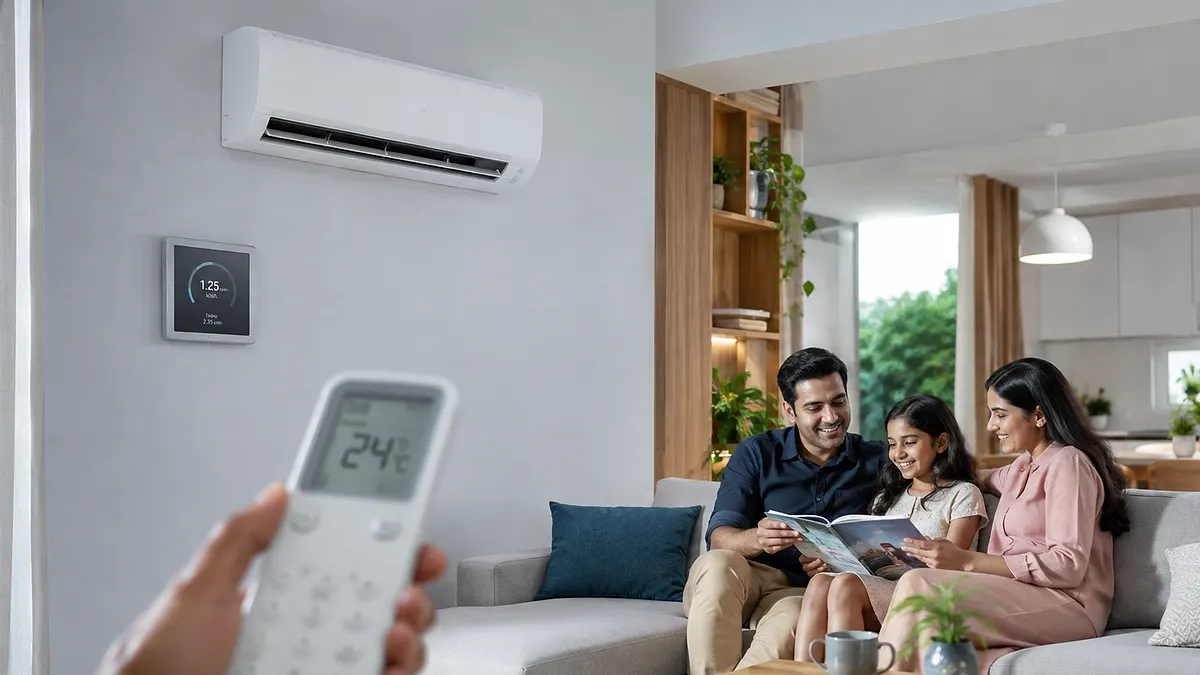
Which uses less electricity: sleep mode or cool mode?
Cool mode maintains the selected target using normal control logic. Sleep mode usually changes the temperature target gradually, may reduce fan speed or display light and can lower overnight compressor demand when the room remains comfortable. Exact behaviour varies by model. Choose sleep mode for stable night use, but use Cool mode when humidity or heat load makes the programmed temperature rise uncomfortable.
Match the mode to sleep comfort and humidity
Mode names are not standardized across every brand. The manual should explain how many degrees the target changes, when the change occurs and whether the fan or display is affected.
Pre-cool the room at a sensible target, then enable sleep mode if its programmed rise suits the occupants. Keep doors and windows closed. If the room becomes sticky or warm before morning, adjust the starting temperature, fan setting, timer or mode instead of choosing an extreme 16°C target.
Across Pondicherry, Villupuram, Cuddalore and Chidambaram, heat, humidity, dust, coastal exposure and room construction vary. Apply the guidance to the actual site instead of using one setting or schedule for every property.
What to check before approving work
Start with safe, observable conditions and move to model-specific technical tests only when the evidence requires them.
Model-specific program
Check the manual for set-point changes, duration, fan behaviour and timer interaction.
Night heat and humidity
Consider occupants, room size, open passages and moisture entry during the night.
Comfort outcome
Review waking comfort, humidity feeling and whether the compressor remains heavily loaded.
Professional checks for AC Sleep and Cool Mode Comparison
Start temperature
Choose a comfortable initial target instead of overcooling the room before sleep.
Airflow
Use quiet, indirect airflow and clean filters so low fan speed does not create restriction.
Timer and occupancy
Use off or on timers only when they match the full sleep period and room conditions.
Consumption tracking
Compare kWh across similar nights rather than assuming the mode label guarantees savings.
Sleep mode and Cool mode compared
One symptom can have several causes. Use the pattern, timing and accompanying signs to narrow the next test instead of replacing parts from a guess.
The table is a decision aid, not a substitute for model-specific procedures, safe instruments or manufacturer service information.
| Decision point | Sleep mode | Cool mode |
|---|---|---|
| Temperature target | Often rises gradually | Maintains selected target |
| Best use | Stable overnight comfort | Precise ongoing cooling |
| Potential saving | Possible through reduced demand | Depends on selected target and load |
| Important limit | Program varies by model | May overcool if target is too low |
Sleep mode is not a repair for high humidity, poor airflow, wrong capacity or an AC that cannot reach the starting target.
How should you compare night-time electricity use?
The final test should reproduce the original operating condition as closely as practical and show whether the reported problem is resolved.
Record the work completed, relevant readings, parts used and any remaining limitation so a future visit starts with evidence rather than assumptions.
- Use nights with similar weather and occupants.
- Start from comparable room conditions.
- Record mode, set point, fan and hours.
- Compare meter or plug-monitor kWh where safe and suitable.
- Include comfort and humidity, not only energy.
From first observation to verified handover
- 1
Read the manual
Identify the exact sleep-mode temperature and timer logic.
- 2
Set a comfortable baseline
Operate Cool mode before sleep without extreme overcooling.
- 3
Test sleep mode
Use it for several comparable nights and record morning comfort.
- 4
Adjust one variable
Change starting target, fan or timer separately to understand the effect.
- 5
Compare energy
Use kWh and comfort trends, not one bill.
Share useful details before the visit
Send the model, AC type, location, symptom timing, settings, error code and a short video where useful. Mention recent cleaning, shifting, electrical work, refrigerant work or power events.
Ask for an itemised scope that separates inspection, cleaning, labour, parts, refrigerant and follow-up tests. Keep the service report for warranty and repeat-fault history.
Ask what is included, what is excluded, which findings support additional work and how the final result will be tested.
Common mistakes to avoid
- Assuming sleep mode behaves identically on every AC.
- Pre-cooling at 16°C unnecessarily.
- Ignoring humidity and waking comfort while chasing minimum kWh.
- Approving work without asking how the final result will be tested and recorded.
Frequently asked questions
Does sleep mode save electricity?
It can when its gradual target change reduces compressor demand and comfort remains acceptable. The amount depends on model, weather, room load and settings.
Does sleep mode switch the AC off?
Not necessarily. It may modify the target and fan while continuing to cool. Some models combine it with a timer.
Is sleep mode good in humid weather?
It can be, but an excessive target rise or very low fan may reduce comfort for some rooms. Test the model's program under actual humidity.
Can I use sleep mode all night?
Yes if the manufacturer permits it and occupants remain comfortable. Adjust or use Cool mode if heat or humidity rises too much.
Which mode is best for children or older adults?
Prioritize stable, comfortable temperature, indirect airflow and individual health needs. Seek medical guidance for specific health conditions.
Talk to Turbo Cooling Solutions
Share your location, AC type and requirement for a clear service response.