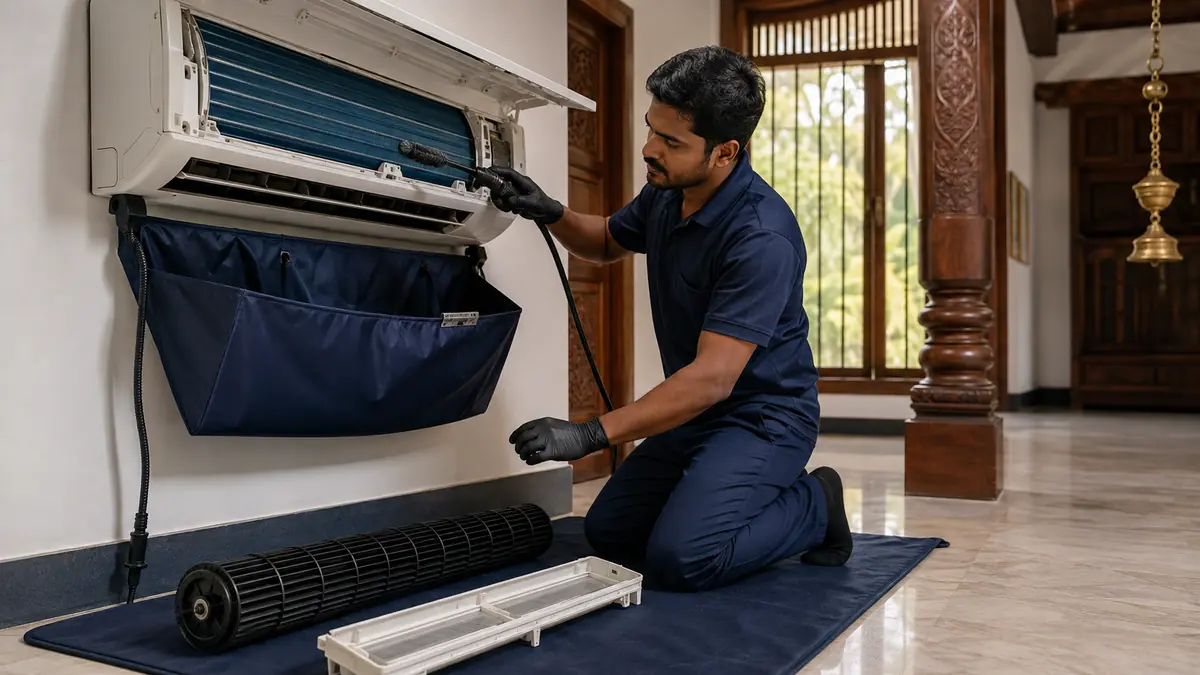
What should you expect?
AC deep cleaning in Chidambaram should follow visible contamination and symptoms. A controlled scope may cover filters, evaporator, blower, louvers, tray, drain and outdoor surfaces while protecting electronics and verifying airflow, cooling and drainage afterward.
When does an AC in Chidambaram need deep cleaning?
Chidambaram systems may combine seasonal dust with humid operation and varied home, institutional or commercial schedules. The most effective cleaning depth depends on actual use, contamination, access and drainage condition.
A removable blower wheel or deeper dismantling may be justified when buildup is inaccessible through routine service, but the quote should explain which components are removed, cleaned, dried and tested.
Chidambaram AC care should consider airflow contamination, dependable drainage, outdoor ventilation, electrical condition and equipment access together.
Signs that routine cleaning may not be enough
Use observed condition to decide whether routine service, deep cleaning or repair is required.
Visible blower-wheel coating
Heavy deposits on the blower can reduce airflow and throw particles into the room.
Coil remains blocked
Dust embedded in the evaporator fins may require careful deeper cleaning with fin protection.
Drain tray contamination
Recurring odour or water issues can involve the tray, drain route, slope and discharge point.
Long-use rooms and halls
Institutional, office or frequently occupied rooms may collect contamination faster than lightly used bedrooms.
A safe AC deep-cleaning checklist
Inspect before deciding depth
Check the filter, coil, blower, louvers, tray, drain, insulation and outdoor unit before confirming the scope.
Protect the room and electronics
Isolate power and protect walls, floors, furniture, motors, sensors, control boards and connectors.
Clean components methodically
Use suitable pressure and material-compatible methods, protecting fins, coatings, bearings and insulation.
Dry, reassemble and verify
Test drainage, airflow, cooling response, odour, controls and abnormal sound before handover.
From enquiry to verified handover
- 1
Share symptoms and service history
Describe weak airflow, odour, dust discharge, leakage, usage and the last cleaning or repair.
- 2
Inspect contamination and access
Confirm which components are affected and whether safe dismantling or separate repair is needed.
- 3
Approve the included components
Clarify coil, blower, tray, drain, louvers, filters, condenser, chemicals, dismantling and exclusions.
- 4
Complete controlled cleaning
Protect the property, control water, avoid electronics and clean only with equipment-compatible methods.
- 5
Reassemble and test the result
Confirm drainage first, then run the AC to verify airflow, cooling, controls, odour and sound.
Planning and maintaining the result
Confirm dismantling, blower access, coil cleaning, drain treatment, outdoor checks, wall protection and reassembly in writing. Ask whether repairs and refrigerant work are separate.
Keep a simple service record for high-use units. Airflow, odour and drain observations help decide future timing more accurately than following the same interval for every AC.
Ask what is included, what is excluded, which findings support additional work and how the final result will be tested.
Common mistakes to avoid
- Buying deep cleaning automatically without evidence of heavy contamination.
- Using excessive pressure or harsh chemicals near fins, coatings and electronics.
- Finishing without checking drainage, airflow, cooling response and the original symptom.
- Approving work without asking what is included, what is excluded and how the completed result will be tested.
Service-area guidance for Chidambaram
The localities below help customers describe the site clearly. Actual availability depends on the exact address, AC type, access, required equipment and confirmed work scope.
Chidambaram town
Town-area enquiries can be checked after the address, AC type, model, floor level and requested work are provided.
Annamalai Nagar
Residential and institutional-area requests should explain operating hours, access restrictions and the number of systems involved.
Bhuvanagiri and Killai side
Nearby-area availability depends on travel, technician schedule, equipment access and the confirmed technical scope.
Frequently asked questions
What is AC deep cleaning?
Deep cleaning is a more detailed, protected cleaning of confirmed contamination on components such as the coil, blower, tray, drain and related airflow surfaces. The exact scope depends on AC type and condition.
How is deep cleaning different from normal AC service?
Routine service handles normal inspection and light cleaning. Deep cleaning may involve additional protection, access and dismantling when coil, blower or drainage contamination is heavy.
Can deep cleaning fix weak cooling?
It can help when dirt restricts airflow or heat transfer. It cannot repair failed fans, sensors, controls, electrical parts or refrigerant leaks, so diagnosis remains important.
Does deep cleaning remove AC odour?
It may reduce odour caused by contaminated indoor components or drainage. Room moisture, mould outside the unit and other sources should also be checked if the smell returns.
Can I request AC deep cleaning in Chidambaram?
Deep-cleaning enquiries can be reviewed for Chidambaram. Share the address, AC type, model, symptoms, number of units and access details to confirm availability.
Talk to Turbo Cooling Solutions
Share the Chidambaram address, AC type, model, symptom or relocation requirement and preferred timing so availability can be checked.