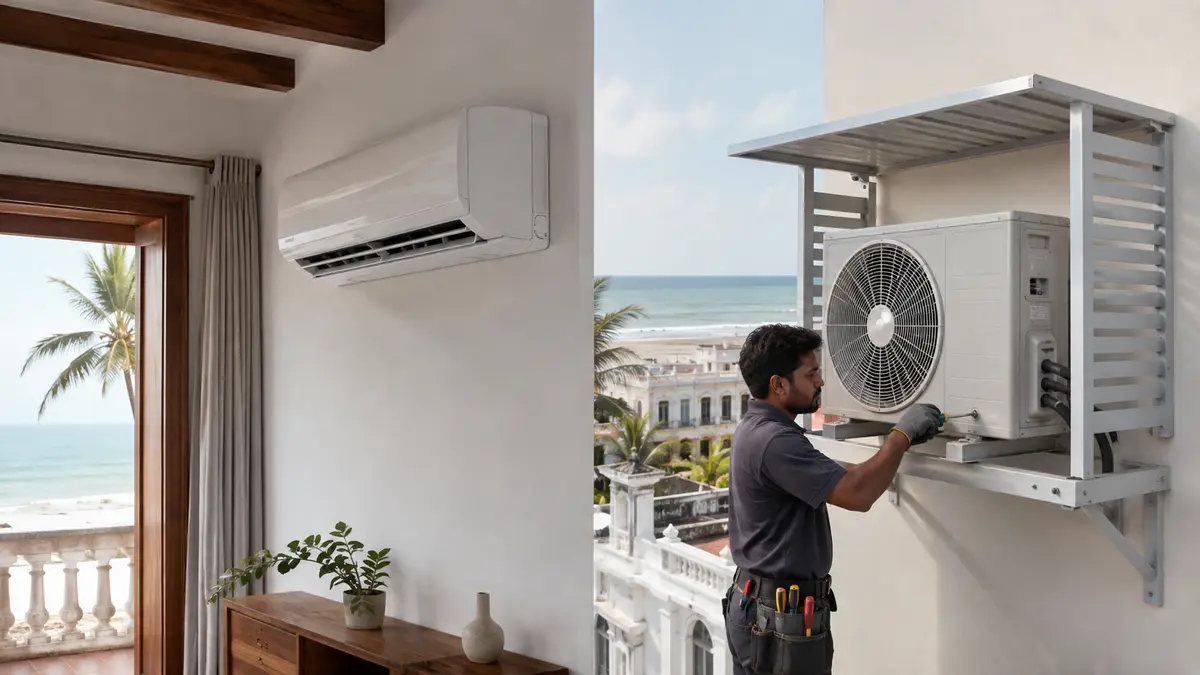
What should you expect?
For a coastal building, protect AC assets at four levels: specify corrosion-resistant features suitable for the exposure, locate units away from direct spray while preserving heat-rejection airflow, apply only compatible approved protective systems, and maintain an asset-wise inspection record. Prioritise rooftops, sea-facing elevations, brackets, fasteners, electrical enclosures, coil edges and pipe joints.
Manage corrosion as an asset programme, not a cosmetic repair
Apartments, hotels, clinics, offices, restaurants and showrooms can contain many AC types and exposure zones. A single annual service checklist is often too broad for coastal properties because a rooftop condenser and a sheltered rear-courtyard unit face different risks.
Facility teams should map each unit, its exposure, age, materials, coating status, structural supports and fault history. This makes budgets more predictable and helps identify unsafe mounting or electrical deterioration before failure.
Buildings near Pondicherry and Cuddalore coastlines should grade exposure by actual site position. Villupuram and Chidambaram properties still need moisture, monsoon and dust protection, even where salt exposure is lower.
Classify every outdoor-unit location
Severe exposure
Sea-facing rooftops, direct salt spray, strong wind and little shelter require the closest review.
Moderate exposure
Balconies or elevations with humid salt air but limited direct spray need condition-based protection.
Sheltered exposure
Courtyards and inland-facing zones may have lower salt load but can suffer heat recirculation or poor drainage.
Indoor critical areas
Server rooms, clinics and customer areas need maintenance priorities based on consequence of cooling failure as well as corrosion.
What a coastal building corrosion plan should include
Asset and exposure register
List model, serial, capacity, location, elevation, orientation, age, coating and inspection history.
Procurement specification
Compare documented coastal durability, coil construction, cabinet protection, warranty conditions and service availability.
Installation standard
Define clearances, drainage, bracket materials, fasteners, isolation between incompatible metals and safe access.
Approved protection system
Record coating product, covered components, application method, curing and future cleaning restrictions.
Inspection grading
Use consistent condition grades for coil, cabinet, base, fasteners, brackets, electrical enclosure and piping.
Cleaning procedure
Define power isolation, electronics protection, approved cleaner, pressure limit, rinse and final check.
Repair threshold
State when surface treatment is acceptable and when components or supports require replacement.
Performance verification
Confirm airflow, cooling, electrical condition, sound and drainage after maintenance.
Use an exposure-and-criticality matrix
Exposure shows how quickly damage may develop. Criticality shows how serious a failure would be. Combining both helps the building team decide inspection order, spare strategy and replacement budget.
| Exposure | Criticality | Planning response |
|---|---|---|
| High | High | Frequent inspection, documented protection and contingency plan |
| High | Low | Condition-based maintenance and planned replacement budget |
| Low | High | Reliable preventive care and performance monitoring |
| Low | Low | Standard schedule with condition review |
Questions to ask before approving an anti-corrosion treatment
Terms such as blue fin, gold fin and coastal coating are not a complete specification. Ask what component is protected, what coating standard or test is documented, who is authorised to apply it, whether heat transfer is affected and what maintenance preserves the warranty.
- Which surfaces are actually coated?
- Is the treatment factory-applied or field-applied?
- What preparation and curing are required?
- Which cleaners are compatible?
- How will coating damage be inspected and repaired?
How to launch a building-wide corrosion programme
- 1
Survey all assets
Map outdoor and indoor units, supports, pipe routes, exposure and business criticality.
- 2
Grade condition
Use photos and consistent categories for coil, cabinet, fasteners, brackets and electrical areas.
- 3
Correct installation risks
Resolve standing water, damaged insulation, unsafe mounts and airflow-restricting enclosures.
- 4
Apply compatible protection
Use documented products and processes suitable for the equipment and condition.
- 5
Review the trend
Compare the same assets across inspections and revise maintenance or replacement priorities.
Budget by condition and consequence of failure
Avoid spreading the same maintenance budget evenly across every unit. Give priority to severe exposure, high-value equipment, critical rooms and assets showing faster deterioration.
A replacement decision should consider coil and structural condition, repeated leakage, electrical deterioration, remaining service life, energy performance, parts support and the cost of downtime.
Include safe access in the budget. Units that cannot be inspected or cleaned without risky improvised access are difficult to protect consistently.
Ask what is included, what is excluded, which findings support additional work and how the final result will be tested.
Common mistakes to avoid
- Using one schedule for all exposure zones.
- Specifying a coating name without a technical scope.
- Painting over corrosion without surface assessment.
- Ignoring brackets, fasteners and electrical enclosures.
- Waiting for cooling failure before reviewing the asset.
- Approving work without asking how the final result will be tested and recorded.
How local climate changes the AC workload
The same AC can behave differently across the service region because outdoor heat, humidity, dust, salt exposure, room construction and daily operating hours are not identical.
Pondicherry
Salt-laden coastal air, high humidity and long cooling hours make clean airflow, drainage, outdoor-coil condition and corrosion checks especially important.
Villupuram
Strong daytime heat and seasonal dust can increase heat load and restrict coils or filters, so shade, sealing and timely cleaning matter.
Cuddalore
Coastal moisture, salt exposure and monsoon conditions call for corrosion-aware inspection, sound mounting and reliable condensate drainage.
Chidambaram
Warm, humid weather and mixed residential or commercial use require correct capacity, moisture removal, airflow and realistic operating schedules.
Frequently asked questions
What is the best AC corrosion protection for a coastal building?
There is no single best coating for every building. Use compatible coastal-suitable equipment, good placement, drainage, materials, approved protective treatments, safe cleaning and condition-based inspection together.
Do all outdoor AC units in a coastal building need the same maintenance?
No. Sea-facing rooftops, sheltered courtyards and inland elevations can have very different salt, moisture, heat and drainage exposure. Grade each zone.
What parts should a coastal AC inspection cover?
Include the outdoor coil, cabinet, base pan, fasteners, brackets, electrical enclosure, cable entries, pipe joints, service valves, insulation, drainage and operating performance.
Can field-applied coating affect AC performance?
An unsuitable or poorly applied coating can obstruct heat transfer, damage materials or affect warranty. Use a technically compatible product and qualified application process.
When should a corroded outdoor unit be replaced?
Consider replacement when corrosion affects pressure-containing components, mounting strength, electrical safety, coil integrity or repair economics. A trained assessment is needed; surface appearance alone is not enough.
How should a facility team record coastal AC condition?
Keep asset IDs, fixed-angle photos, exposure zone, condition grade, work completed, coating details, readings, repeat faults and the next review date.
Talk to Turbo Cooling Solutions
Share the AC type, room use, operating hours and exact symptom. Turbo Cooling Solutions can inspect the system and explain the findings before recommending work.