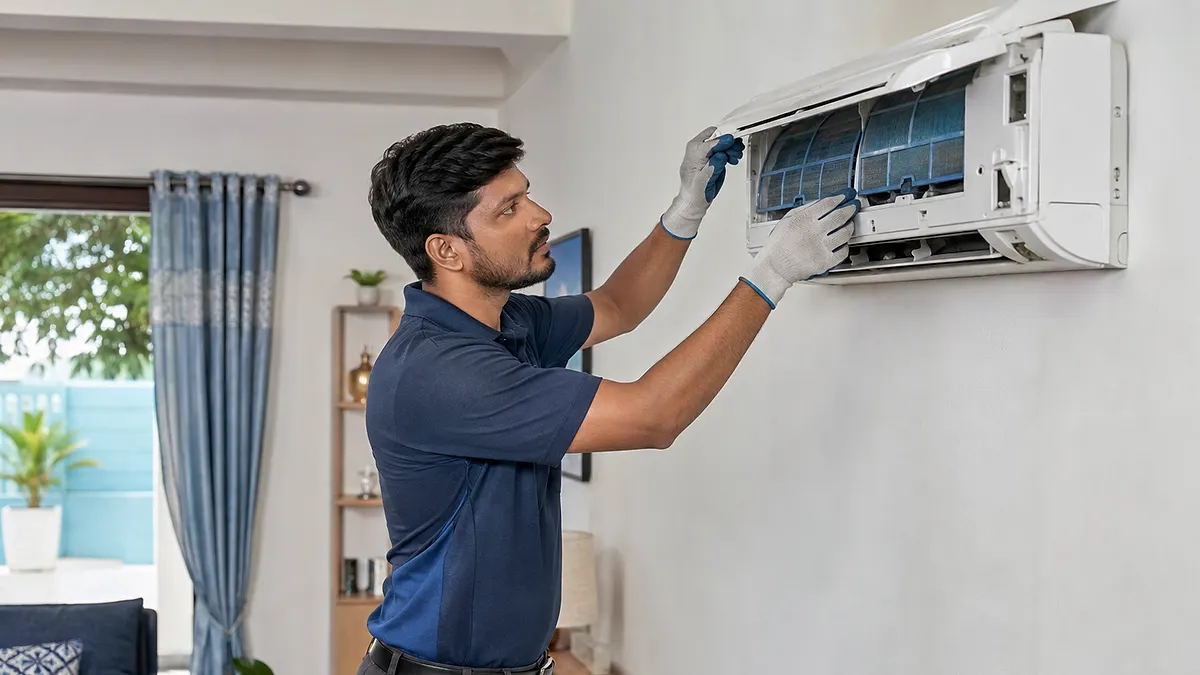
How should an AC be protected in a vacant home?
Before a home becomes vacant, clean or inspect filters, confirm drainage, record AC condition, secure power according to the manufacturer and property plan, keep the outdoor unit clear and prevent pest access without blocking ventilation. During long vacancy, manage building humidity and leaks. Before restart, inspect wiring, nests, corrosion, mounts, pipe insulation and drains, then operate under observation instead of immediately demanding gas filling.
Coordinate AC care with the whole vacant property
Equipment can deteriorate while idle: pests enter enclosures, terminals corrode, insulation ages, drains block and building humidity affects indoor surfaces. A planned shutdown and restart reduces surprises.
Chidambaram humidity, seasonal rain and closed rooms can create dampness even when the AC is off. Fix roof or plumbing leaks, preserve safe ventilation and arrange periodic property inspection. Do not wrap an outdoor unit in a way that traps moisture or becomes unsafe in wind.
Chidambaram experiences hot, humid conditions with seasonal dust and rain. AC decisions should consider room use, closure periods, drainage, outdoor exposure and the condition found during inspection.
What to check before approving work
Start with safe, observable conditions and move to model-specific technical tests only when the evidence requires them.
Before shutdown
Record operation, filters, drainage, remote batteries, outdoor clearance and any existing fault.
During vacancy
Check building leaks, pests, electrical safety, vegetation and storm effects at planned intervals.
Before restart
Inspect cables, mounts, nests, corrosion, insulation, drain route and indoor contamination before energizing.
Professional checks for Vacant-Home AC Maintenance
Asset record
Photograph model, serial, condition, controls and last service details.
Power plan
Follow manufacturer and qualified electrical guidance for isolation or controlled operation.
Pest and weather check
Protect openings without blocking airflow and inspect after storms or construction.
Commissioned restart
Run under observation and verify fan, cooling, drainage, sound, controls and errors.
Vacancy stage and the right AC action
One symptom can have several causes. Use the pattern, timing and accompanying signs to narrow the next test instead of replacing parts from a guess.
The table is a decision aid, not a substitute for model-specific procedures, safe instruments or manufacturer service information.
| Stage | Priority | Record |
|---|---|---|
| Before leaving | Clean/inspect and document | Condition, settings and open issues |
| During vacancy | Check building and outdoor exposure | Leaks, pests, storms and vegetation |
| Before power return | Inspect electrical and mounting safety | Damage, corrosion and isolation |
| First cooling cycle | Observe complete operation | Sound, errors, drainage and room response |
If the property has flooded, suffered roof leakage, pest damage or electrical work, arrange the relevant specialist assessment before operating the AC.
What should be confirmed when the home reopens?
The final test should reproduce the original operating condition as closely as practical and show whether the reported problem is resolved.
Record the work completed, relevant readings, parts used and any remaining limitation so a future visit starts with evidence rather than assumptions.
- No damaged cable, nest or wet electrical enclosure is present.
- Indoor and outdoor mounts remain secure.
- Filters and air paths are clean enough for operation.
- Drainage reaches its safe outlet.
- The AC completes a stable cooling cycle without warning.
From first observation to verified handover
- 1
Document before vacancy
Record operation, condition and maintenance needs.
- 2
Prepare the property
Address leaks, humidity, pests, power and outdoor clearance.
- 3
Inspect periodically
Use a caretaker schedule suited to season and exposure.
- 4
Survey before restart
Check wiring, mounting, drainage, insulation and contamination.
- 5
Restart under observation
Verify safe, stable cooling and record the result.
Share useful details before the visit
Send the model, AC type, location, symptom timing, settings, error code and a short video where useful. Mention recent cleaning, shifting, electrical work, refrigerant work or power events.
Ask for an itemised scope that separates inspection, cleaning, labour, parts, refrigerant and follow-up tests. Keep the service report for warranty and repeat-fault history.
Ask what is included, what is excluded, which findings support additional work and how the final result will be tested.
Common mistakes to avoid
- Wrapping the outdoor unit so moisture is trapped.
- Leaving remote batteries to leak during long vacancy.
- Restarting despite pest, water or wiring damage.
- Approving work without asking how the final result will be tested and recorded.
Frequently asked questions
Should I leave the AC breaker on in a vacant home?
Follow the equipment manual, property electrical plan and qualified advice. The correct choice depends on controls, surge protection, monitoring and vacancy duration.
Should the AC run occasionally while the home is empty?
Only as part of a safe, supervised humidity and property plan. Unattended operation can hide leaks, drainage faults or electrical problems.
Can I cover the outdoor AC unit?
Do not operate it covered. Any off-season protection must avoid trapped moisture, blocked drainage, wind risk and pest nesting.
Does unused AC refrigerant disappear?
No. A sealed circuit does not consume refrigerant while idle; low charge indicates leakage or prior service loss.
What should be checked after a year unused?
Inspect electrical condition, pests, corrosion, mounts, filters, coils, drainage, insulation, controls and full operating performance.
Talk to Turbo Cooling Solutions
Share your location, AC type and requirement for a clear service response.