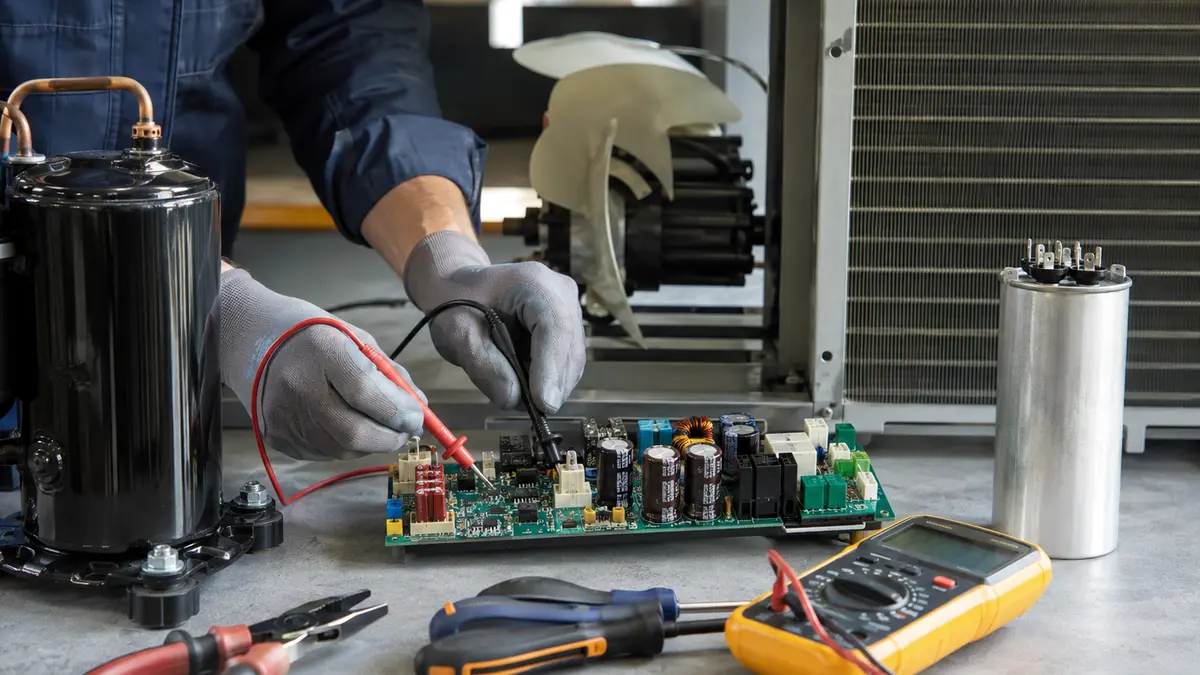
Should you choose a genuine or compatible AC part?
Choose an AC spare part by verified model and part number, electrical and mechanical compatibility, supplier traceability, written warranty and installation testing—not by the words genuine or compatible alone. Genuine parts come through the brand's supply route; compatible parts may be acceptable only when specifications, safety, fit and support are documented for the exact equipment.
Part identity, compatibility and support matter more than labels
A reliable parts decision begins after fault confirmation. Ask for the failed component identity, equipment model, test evidence, replacement brand or source, warranty terms and the checks that will be performed after installation.
Do not approve a PCB, motor, sensor, capacitor, contactor or compressor from a verbal description. The quotation should identify the item and whether it is new, repaired, refurbished, genuine-brand, OEM-supplied or third-party compatible. Safety-critical and refrigerant-circuit components require especially careful specification matching.
In Pondicherry, coastal humidity and salt exposure can worsen corrosion at terminals, outdoor boards and metal assemblies. The root cause should be corrected before fitting a new part, or even the right replacement may fail again.
Three checks before any AC spare part is fitted
Use these checks to make the quote comparable and preserve accountability.
What exactly failed?
Request diagnostic evidence and the old part identity. A fault code alone may not prove that the named component is defective.
Is the replacement traceable?
Record the manufacturer, part number, rating, source and whether the part is genuine, OEM, refurbished or compatible.
What warranty applies?
Clarify parts and labour cover, exclusions, invoice requirements and the remedy if the same confirmed defect returns.
What a transparent AC parts quotation should contain
Equipment identity
Record indoor and outdoor model details and, where available, serial numbers.
Replacement identity
List part number, rating, condition, source and brand status without ambiguous wording.
Root-cause action
State whether voltage, wiring, corrosion, airflow, refrigerant conditions or water exposure contributed to failure.
Installation verification
Specify electrical, control, cooling, drainage and safety checks after the replacement.
Genuine, compatible and refurbished parts are different propositions
A genuine part is sold through the equipment brand's recognized supply chain for the identified application. It may simplify compatibility and brand support, but identity and warranty should still be recorded.
A compatible part is made or supplied outside that route. It should only be considered when ratings, dimensions, connections, control logic, safety approvals and application are verified. Refurbished parts require separate disclosure because their condition and warranty differ from new parts.
| Check | Genuine part | Compatible part |
|---|---|---|
| Application | Brand-listed for identified model | Must be independently matched |
| Traceability | Brand packaging or authorized source | Manufacturer and supplier details required |
| Warranty | Confirm brand/seller and labour terms | Confirm seller and installer terms |
| Best decision basis | Identity plus diagnosis | Full specification plus diagnosis |
Do not bypass a safety device, fit an underrated electrical component or substitute a control board merely because connectors appear similar.
The invoice and old part create an auditable repair record
Ask for the replaced part to be shown and returned when practical, subject to exchange or warranty-return rules. Photograph labels before installation if they will become inaccessible.
The handover note should link the diagnosis, approved part, work completed, test outcome and warranty. This makes later support faster and discourages unclear substitutions.
- Model and serial details recorded.
- Old and new part labels documented.
- Part condition and source stated.
- Root-cause checks completed.
- Parts and labour warranties separated.
From diagnosis to documented parts handover
- 1
Confirm the fault
Test the system and separate the failed component from wiring, supply or upstream causes.
- 2
Match the replacement
Verify part number, ratings, dimensions, connectors, controls and intended application.
- 3
Approve transparently
Issue a quote stating part status, price, labour, warranty and exclusions.
- 4
Install and prove
Fit safely, correct contributing issues and record final operating tests.
Compare total repair value, not only the part price
A cheaper part can be poor value if compatibility is uncertain, installation labour is repeated or warranty support is weak. A higher-priced genuine part is not automatically the right answer if the diagnosis is wrong or the rest of the system is near end of life.
For older ACs, compare repair cost with equipment age, efficiency, refrigerant availability, repeated failures and the condition of the compressor and coils before authorizing an expensive board or compressor.
Ask what is included, what is excluded, which findings support additional work and how the final result will be tested.
Common mistakes to avoid
- Buying from appearance or connector shape alone.
- Replacing a part before confirming the root cause.
- Accepting unclear terms such as company part without identification.
- Leaving parts warranty and installation labour warranty unwritten.
- Approving work without asking how the final result will be tested and recorded.
Frequently asked questions
Are genuine AC spare parts always required?
Not in every non-warranty situation, but the replacement must be correct and safe for the exact model. Follow manufacturer requirements, especially during warranty and for control or safety-critical components.
How can I identify a genuine AC part?
Check the part number, packaging, invoice, supplier traceability and brand or authorized-service documentation. A logo alone is not reliable proof.
Can a compatible PCB damage an inverter AC?
An incorrectly matched board can cause malfunction or damage. Firmware, sensors, communication, power ratings, connectors and motor or compressor control must match the intended application.
Should the technician return the old part?
Ask for it before approval. It can usually be shown or returned, but exchange, core-return and manufacturer warranty procedures may require the old part to be retained by the supplier.
What should an AC part warranty state?
It should identify the part, warranty period, start date, covered defect, exclusions, proof required, labour responsibility and resolution process.
Talk to Turbo Cooling Solutions
Share your location, AC type and requirement for a clear service response.