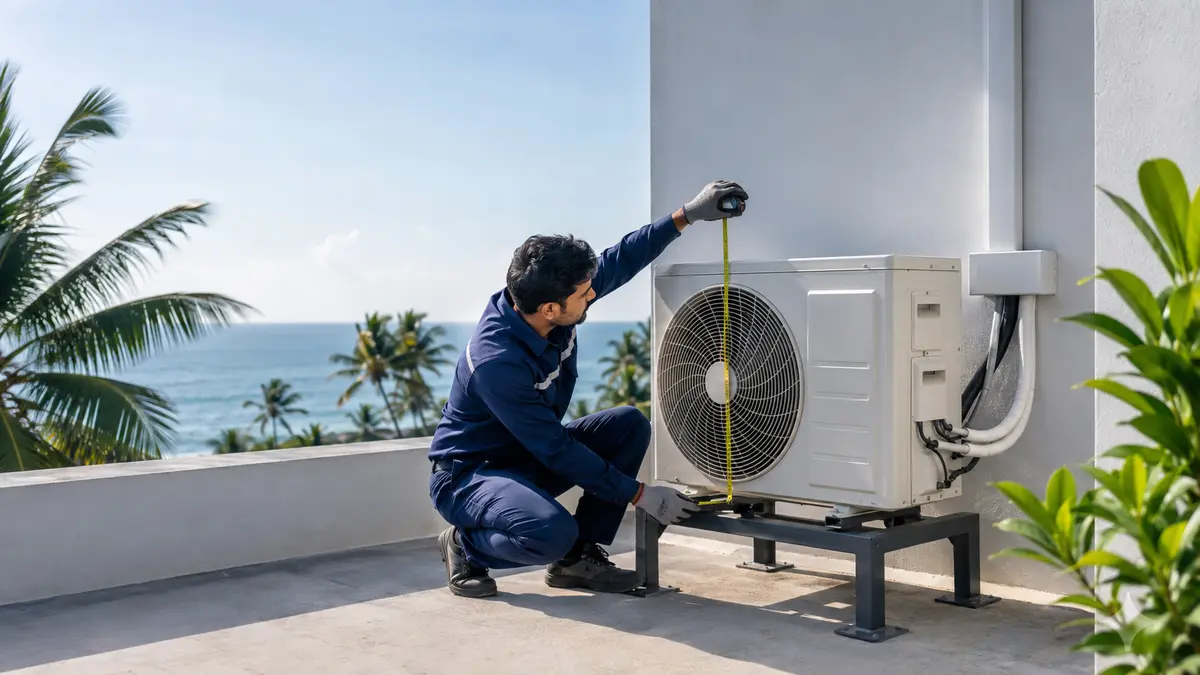
When is outdoor-unit heat abnormal?
Outdoor units normally reject heat and feel warm, but abnormal overheating may involve blocked clearance, a dirty or damaged condenser, recirculated hot air, a slow or failed fan, loose electrical connections, voltage problems, incorrect refrigerant conditions or compressor stress. Stop the AC if it repeatedly trips, smells hot, makes severe noise or cycles on protection. Restore safe airflow and request measured diagnosis.
Shade must not block condenser airflow
Hot discharge air is expected from a working condenser. Concern rises when the unit cannot reject heat, stops repeatedly, produces a burning smell, draws abnormal current or shows an error.
Villupuram's strong afternoon heat can raise condensing load. Keep manufacturer clearances open and remove safe external obstruction, but do not box in the unit with a close roof or screen. Coil cleaning, fan tests, electrical measurements and refrigerant assessment should follow the equipment's condition.
Villupuram homes and businesses can face strong seasonal heat, roadside dust and variable operating schedules. Filter loading, outdoor airflow and electrical conditions should be checked with the reported symptom.
What to check before approving work
Start with safe, observable conditions and move to model-specific technical tests only when the evidence requires them.
Clearance and recirculation
Check whether discharged hot air can escape instead of returning through the coil.
Fan operation
Observe whether the outdoor fan starts, maintains speed and runs without abnormal sound.
Protection symptoms
Record error code, cycle time, breaker event, smell and the weather condition when shutdown occurs.
Professional checks for AC Outdoor Overheating Diagnosis
Site airflow survey
Measure clearances and inspect walls, screens, multiple units and hot-air recirculation.
Condenser condition
Inspect dirt, bent fins, corrosion and cleaning suitability without damaging the coil.
Fan and electrical tests
Check motor, drive, wiring, terminals, voltage and current according to the model.
System operation
Assess pressures, temperatures, load and compressor protection only after airflow is established.
Overheating clues and responsible checks
One symptom can have several causes. Use the pattern, timing and accompanying signs to narrow the next test instead of replacing parts from a guess.
The table is a decision aid, not a substitute for model-specific procedures, safe instruments or manufacturer service information.
| Observation | Possible area | Next check |
|---|---|---|
| Very hot enclosed balcony | Hot-air recirculation | Improve open discharge and intake path |
| Fan slow or stopped | Motor, drive or obstruction | Isolate and test fan system |
| Dirty or bent condenser | Restricted heat transfer | Use coil-safe cleaning and fin care |
| Trips under peak load | Electrical or thermal stress | Measure supply, current and protection cause |
Switch the system off when there is burning smell, smoke, repeated breaker tripping, water near wiring or unsafe access. Do not bypass a protection device.
How should the result be verified?
The final test should reproduce the original operating condition as closely as practical and show whether the reported problem is resolved.
Record the work completed, relevant readings, parts used and any remaining limitation so a future visit starts with evidence rather than assumptions.
- Outdoor clearances meet model needs.
- Fan speed and direction are correct.
- The coil is clean without new fin damage.
- No thermal protection or trip repeats.
- Room cooling remains stable during a representative hot period.
From first observation to verified handover
- 1
Stop unsafe operation
Isolate for smell, smoke, severe vibration or repeated tripping.
- 2
Survey airflow
Check condenser intake, discharge, shade and nearby heat recirculation.
- 3
Inspect components
Assess coil, fan, wiring, terminals and corrosion.
- 4
Measure under load
Check electrical and refrigerant performance using model data.
- 5
Retest in real conditions
Confirm stable cooling without overheating protection.
Share useful details before the visit
Send the model, AC type, location, symptom timing, settings, error code and a short video where useful. Mention recent cleaning, shifting, electrical work, refrigerant work or power events.
Ask for an itemised scope that separates inspection, cleaning, labour, parts, refrigerant and follow-up tests. Keep the service report for warranty and repeat-fault history.
Ask what is included, what is excluded, which findings support additional work and how the final result will be tested.
Common mistakes to avoid
- Wrapping or boxing the outdoor unit for shade.
- Using excessive water pressure on corroded fins.
- Ignoring a slow fan while adding refrigerant.
- Approving work without asking how the final result will be tested and recorded.
Frequently asked questions
Is it normal for an AC outdoor unit to be hot?
Yes, it rejects room heat outdoors. Abnormal signs include repeated shutdown, burning smell, tripping, severe noise, failed fan or poor cooling.
Can I pour water on an overheating outdoor unit?
Do not use water as an emergency fix, especially near electrical sections. Find the airflow, fan, electrical or system cause safely.
Does shade improve condenser performance?
Reducing direct sun may help slightly, but any shade structure must preserve manufacturer intake, discharge and service clearances.
Can a dirty condenser cause AC shutdown?
Severe restriction can increase operating stress and contribute to protection. Cleaning must suit the coil and be followed by a complete test.
Why does overheating happen only in the afternoon?
Peak outdoor heat, sun, high room load, low voltage or hot-air recirculation can expose a marginal installation or component fault.
Talk to Turbo Cooling Solutions
Share your location, AC type and requirement for a clear service response.